Ideas for the play‑based Pre‑K classroom
From one Pre-K teacher to another: research-grounded ideas you can bring into your classroom and adapt for your students.
Browse by classroom corner
No posts in this corner yet. More are on the way!
Free goodies for your classroom
How to Choose a Study Topic Your Preschoolers Will Love
The best study topic comes from your students' interests, not from a calendar of themes. Watch and listen to what excites your class, gather their drawings and questions, and choose a topic they can investigate with real, hands-on experiences. Then test it with an anticipatory web before you commit.
If you're curious about creating your own study, I'd recommend following at least one Creative Curriculum study first. You'll get a sense of what a study involves and how to run one with preschoolers.
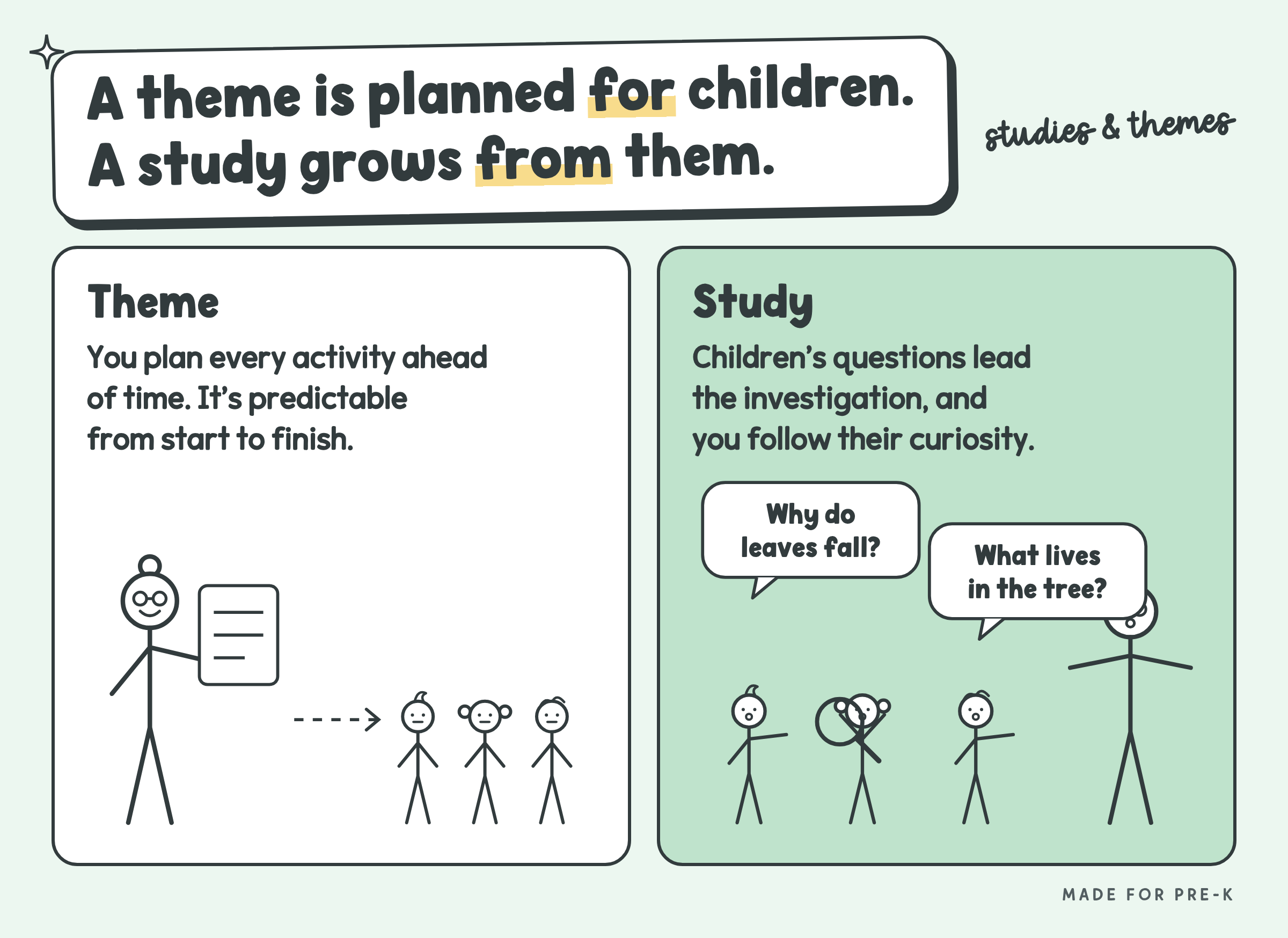
What is the difference between a theme and a study?
This is one of the biggest mistakes I see when teachers create their own studies: structuring it like a theme.
A theme gives students materials and activities from beginning to end. It's predictable, so you can do all the prep up front. The ideas usually come from the teacher, colleagues or social media, not necessarily from the students.
A study is an investigation of questions that you and your students ask, answered through hands-on experiences. You create open-ended experiences that spark curiosity, watch where students' interests go, and build the next investigation from what you observe.
A theme connects content areas, but it can feel out of context for children. A study starts with something they genuinely want to know.
Why is the topic so important?
The topic is everything. When students care about it, they ask real questions, stay engaged and take ownership of their learning, at four years old. That's powerful, and you get to facilitate it.
Once you have an idea, check whether it's viable by creating an anticipatory web of possible questions and learning opportunities across the curriculum. That web becomes the roadmap for your study.
How do I find out what my students are interested in?
As you near the end of the First Six Weeks guide, you'll come to a Ministudy. What are students talking about? What gets them excited? The Ministudy helps you figure out your next study. If you have a say in your program, use your Ministudy observations, drawings and quotes to choose.
Try this: a listening walk. Give each student a mini clipboard, paper and a pencil. Walk around the school or neighborhood and ask them to draw the sounds they hear. Back in the classroom, have students share their drawings with a partner. Then ask each child about their drawing and write down what they say. Bonus: this is valuable GOLD documentation.
Try this: a looking walk. Still not sure? Do it again, but this time students draw anything interesting they see. You'll usually notice many students drawing the same things, which points you to a study that fits their interests.

Which study should I start with if I'm new to The Creative Curriculum?
The Creative Curriculum recommends starting with the Balls study, since that guide includes a special section of daily tips called "Getting to Know Studies." If you don't plan to do Balls, at least skim those tips.

What if I'm stuck between two topics?
Hold a class vote! Students get excited, have a voice and feel invested in the study. And when students choose, they stay engaged and won't get bored.

Go deeper: The Curriculum Corner
Ready to plan and run your own studies with confidence? My course The Curriculum Corner walks you through The Creative Curriculum step by step, including how studies and investigations come together.
Frequently asked questions
What is a study in The Creative Curriculum?
A study is an in-depth investigation of a topic, built around questions children ask and answer through hands-on experiences.
What makes a good preschool study topic?
A topic children can explore firsthand with real objects and experiences, connected to their everyday lives and interests.
What is an anticipatory web?
A brainstorm of possible questions, vocabulary and learning experiences connected to a topic. It helps you check whether the topic has enough depth for a study.
Can I create my own Creative Curriculum study?
Yes. Follow at least one published study first so you know how a study unfolds, then build your own around your students' interests.