
Ideas for the play‑based Pre‑K classroom
From one Pre-K teacher to another: research-grounded ideas you can bring into your classroom and adapt for your students.
Browse by classroom corner
No posts in this corner yet. More are on the way!
Free goodies for your classroom
How to Handle Defiance in Preschool (Without a Power Struggle)
Most defiance in preschool isn't disrespect. It's a child showing a big feeling with the only tools they have right now. When a student rolls their eyes, sticks out their tongue or shouts "No!", the most helpful move is to stay calm, name the feeling, and teach a better way to say it.
From one Pre-K teacher to another: I know how those moments land. An eye roll in the middle of circle time can hit a nerve fast. But after 15+ years in the classroom, I've learned that those little moments of defiance are some of the best teaching opportunities we get. Here's how I handle them.
Why do preschoolers act defiant?
Preschoolers are still learning to put feelings into words. When something feels unfair or disappointing, the feeling shows up in their body first: a scowl, a stomp, a tongue. They haven't learned yet that those signals hurt other people's feelings, or what to do instead. That's a skill, and skills can be taught.
How do I respond to defiance without a power struggle?
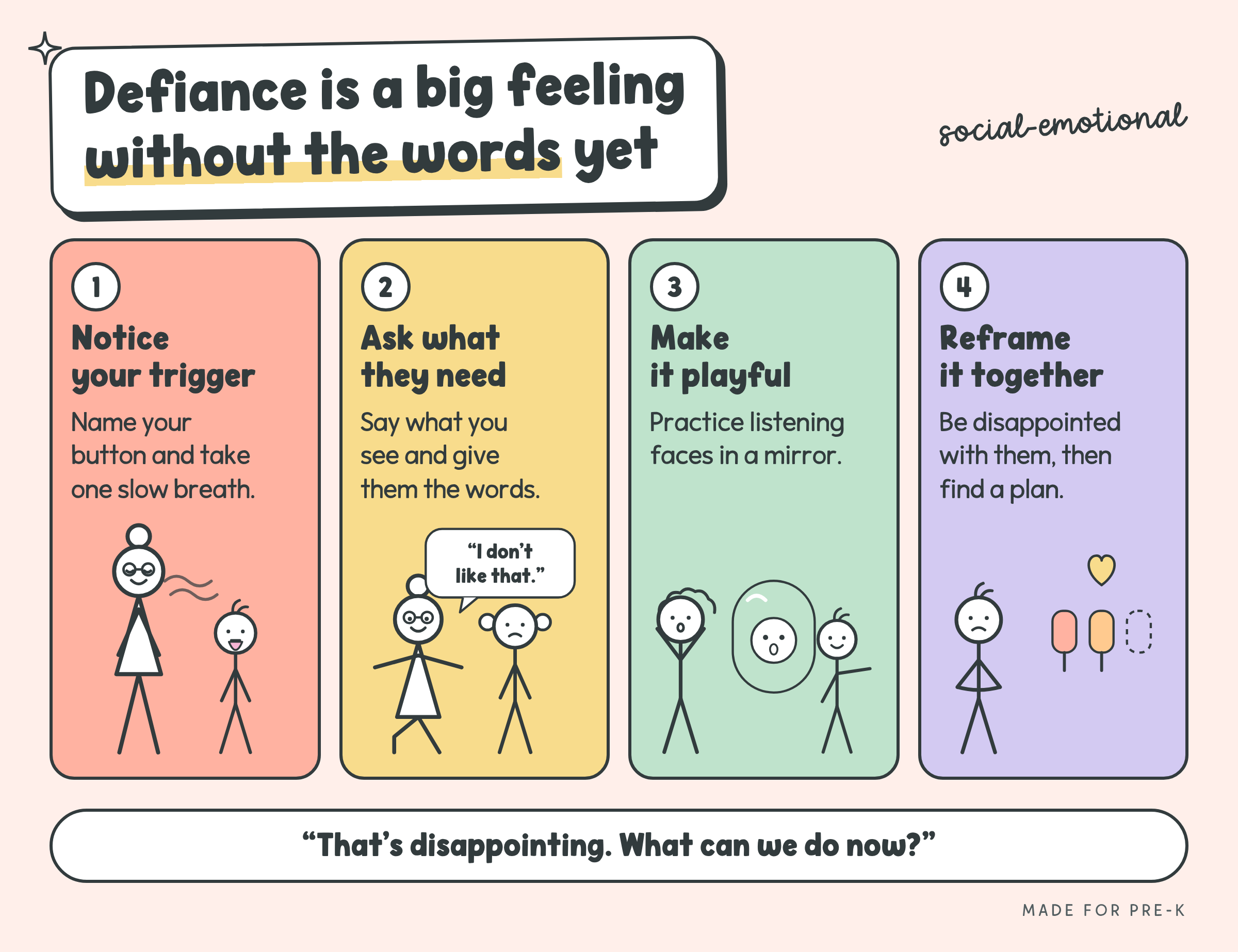
1. Notice your own trigger first
Before you respond, take a breath and ask yourself why this behavior bothers you so much. For a lot of us, an eye roll brings up how we were raised and what "respect" looked like at home. Knowing where your reaction comes from helps you respond with empathy instead of frustration.
Try this: Next time a behavior gets under your skin, silently name it ("That's my button") and take one slow breath before you speak.
2. Swap "disrespectful" for "what do they need?"
When we label a child as disrespectful, we stop looking for the need behind the behavior. Instead, focus on the feeling and give the child words to use next time. When children have another way to show disappointment or dislike, they don't need the eye roll.
Try this: Say what you see and offer a script: "Your eyes rolled. I think you don't like that idea. You can say, 'I don't like that. Can I do something else?'"
3. Teach the social skill, and make it playful
Listening with our faces is something we have to teach. Talk with students about what our faces say when someone is speaking to us. Then use humor: turn silly faces into a game at a fun moment, practice "listening faces" in a mirror, or play a quick guess-the-feeling game. When you model the behavior and guide them, students start connecting feelings to better ways to show them.
Try this: During whole group, hold up a mirror and practice three faces together: a listening face, a disappointed face, and a "that's not fair" face. Then practice the words that go with each one.
4. Reframe disappointment together
Disappointment is part of life, and preschool is the perfect place to practice it. Say it's snack time and the blue popsicles are gone. Instead of brushing it off, be disappointed together: "Oh no, I wanted blue too!" Then help the child name the feeling and look at what's still possible: red, orange, or blue tomorrow.
Try this: Use one phrase over and over: "That's disappointing. What can we do now?" Students will start using it themselves.
What if the defiance keeps happening?
Watch for patterns. When does it happen, with whom, and what comes right before? Defiance that keeps coming back is information about what a child needs. I also wrote about the skill underneath all of this, self-regulation, in How to Teach Self-Regulation in Preschool: 6 Strategies.
Go deeper
If you want a clear way to read the message behind a behavior and respond with calm, connected support, I made a short workshop for that: Beyond Their Behavior. It's $11, and it's all about seeing behavior as communication.
With patience, understanding and a little playfulness, we can help our students learn to express big feelings in ways that work for them and for the people around them. Those are skills they'll use for life.
Frequently asked questions
Is defiance normal for preschoolers? Yes. Preschoolers are building independence and learning to express feelings. Testing limits is expected. Our job is to teach the words and skills that replace the behavior.
Should I ignore eye rolling in preschool? Don't punish it, but don't ignore the feeling either. Name what you see, guess the feeling, and offer words the child can use instead.
How do I teach preschoolers to handle disappointment? Be disappointed with them, name the feeling, and look at what's still possible. Repeat the same short phrase so children learn it.
What causes defiant behavior in Pre-K? Usually a big feeling plus a missing skill: not having the words to say "I don't like that" or "That's not fair." Patterns can also point to transitions, tiredness or unclear expectations.